


- This event has passed.
Stages of Enlightenment
July 26, 2025 @ 9:00 AM - 11:30 AM
RSVP
Fees: $ 80 + tax
Stages of Enlightenment, July 26, 9 am to 11:30 am. There are no pre-requisites for this class.
What are the steps to become the Buddha, based on the teachings of the Elders (Theravada Buddhism) in Pali Canon, given by the Abbott of the first monastery in Lumbini, the birthplace of the Buddha Shakyamuni. The Theravada tradition, one of the oldest schools of Buddhism, dates back over 2,500 years to the teachings of Gautama Buddha in what is now Nepal and India. Predominant in countries like Sri Lanka, Thailand and Myanmar, Theravada’s approach outlines a methodical path to enlightenment.
Seven Stages of Purification (saththa visuddhi) in Theravada Buddhism
- Purification of conduct (sila-visuddhi)
- Purification of mind (citta-visuddhi)
- Purification of view (ditthi-visuddhi)
- Purification by overcoming doubt (kankha-vitarana-visuddhi)
- Purification by knowledge and vision of what is path and not-path (maggamagga-nanadassana-visuddhi)
- Purification by knowledge and vision of the course of practice (patipada–nanadassana-visuddhi)
- Purification by knowledge and vision (nanadassana-visuddhi)
The seven stages of purification are described in the Discourse on the Relay of Chariots (ratha-vinitha sutta ) of the Majjhima Nikaya (collection of the Buddha’s middle length discourses). It is based on a dhamma discussion between the Venerable Sariputta, one of the Buddha’s two chief disciples and Venerable Punna Mantani-putta. In this sutta,
Similarly, in the case of the seven stages of purification, none of the seven stages singularly can lead to the attainment of Nibbana. Each stage of purification constitutes the basis for the subsequent stage until the final stage of purification by knowledge and vision which constitutes the basis for the attainment of Nibbana. This sequential process can be described as follows;
- Purification of conduct is for the sake of attaining purification of mind
- Purification of mind is for the sake of attaining purification of view
- Purification of view is for the sake of attaining purification by overcoming doubt
- Purification by overcoming doubt is for the sake of attaining purification by knowledge and vision of what is path and not-path
- Purification by knowledge and vision of what is path and not-path is for the sake of attaining purification by knowledge and vision of the course of practice
- Purification by knowledge and vision of the course of the practice is for the sake of attaining purification by knowledge and vision
- Purification by knowledge and vision is for the sake of attaining Nibbana without clinging
The Pali Canon is the complete scripture collection of the Theravada school. As such, it is the only set of scriptures preserved in the language of its composition. It is called the Tipitaka or “Three Baskets” because it includes the Vinaya Pitaka or “Basket of Discipline,” the Sutta Pitaka or “Basket of Discourses,” and the Abhidhamma Pitaka or “Basket of Higher Teachings”. The Tipitaka is considered to be the authoritative source of Theravada Buddhism, which is the oldest surviving form of Buddhism. It is also one of the most complete records of the teachings and practices of early Buddhism. The teachings contained in the Tipiṭaka are also known as the Doctrine of the Elders [Theravāda]. Some of the monks who had heard the Buddha preach in person were Arahants, and so by definition, ‘pure ones’ free from passion, ill-will and delusion and therefore, were capable of retaining the Buddha’s words. Even those devoted monks who had not yet attained Arahantahood but had reached the first three stages of sainthood and had retentive memories could also call to mind word for word what the Buddha said. One such monk was Ānanda, the chosen attendant and constant companion of the Buddha during the last twenty-five years of his life. Ānanda was highly intelligent and gifted with the ability to remember whatever he had heard. Indeed, it was his express wish that the Buddha always relate all of his discourses to him and although he was not yet an Arahanta he committed to memory word for word all the Buddha’s sermons.
Teacher
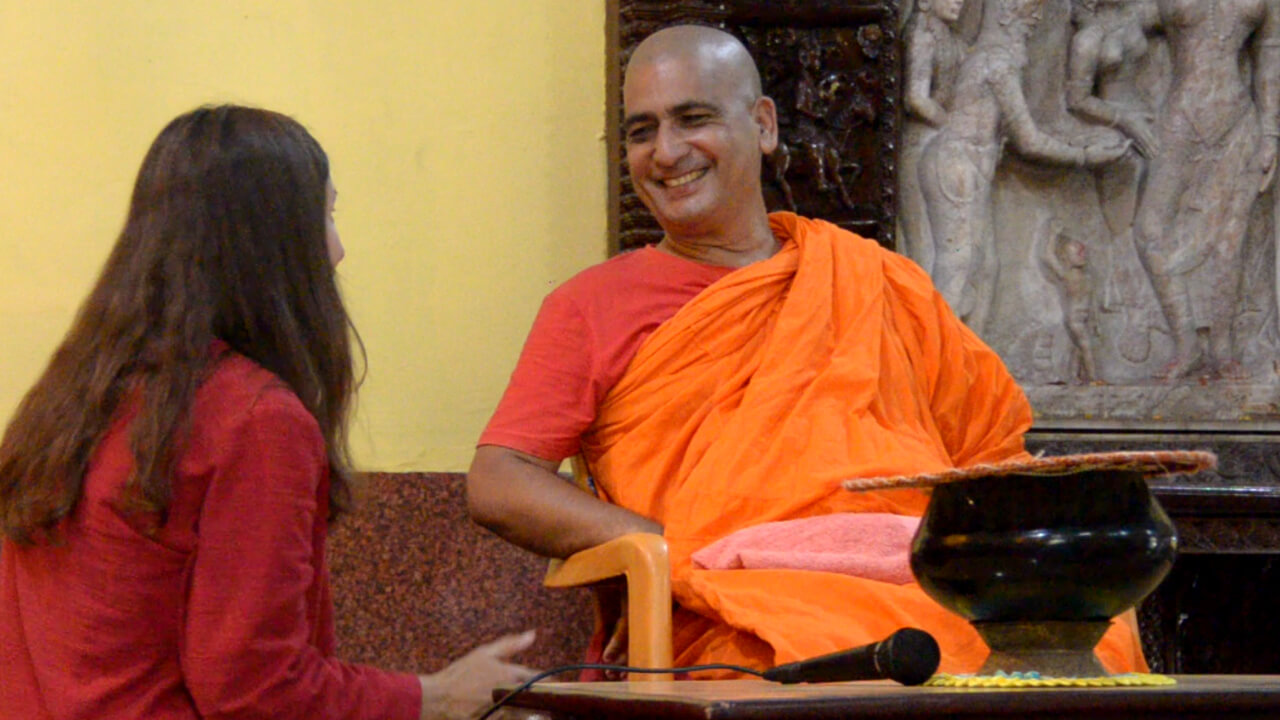
Abbott Bhante Sagara Dhamma, The Guiding Light of Rajakiya Boudha Bihar
Bhante Sagara Dhamma, also known as Dharma Bikram Shah, is the revered Chief Abbot of Rajakiya Boudha Vihar, located in the sacred gardens of Lumbini. With a deep commitment to Buddhist teachings and community service, he has spent over two decades in spiritual practice and social work across Nepal and Sri Lanka. Ordained as a Buddhist Samanera in 2001 and receiving Higher Ordination (Upasampada) in 2002, Bhante Sagara Dhamma has undergone rigorous training in Buddhist meditation, Abhidhamma, and philosophy. His service includes leading Buddhist education awareness programs, social service initiatives, and humanitarian efforts. Recognized for his dedication, he has received prestigious awards such as the Dharma Seela Viddhyota Briti and Bishwa Keerthi Sri Dhamma Visharada for spreading the wisdom of Buddha’s teachings in Nepal and beyond.
[academia_icon_box layout_style=”style5″ icon_type=”fontawesome” icon_fontawesome=”fas fa-globe” icon_color=”#8c1115″ link=”url:%20https%3A%2F%2Fus04web.zoom.us%2Fj%2F9074655172%3Fpwd%3DMbT2GhE8xIhDeaqfSPdoKObZNGZR10.1|title:How%20to%20join%20this%20event%20online”]
How to join this event online?
- On this event page, click on RSVP to reserve your place.
- Make sure that you are connected to the Internet and open a web browser.
- Click on: https://us04web.zoom.us/j/9074655172?pwd=MbT2GhE8xIhDeaqfSPdoKObZNGZR10.1
- Click on the Open Zoom Meetings button.
- When you log in please mute your speaker.
- You are welcome to enable your camera.
- There is a chat button for questions.